
Stainless Steel Bar
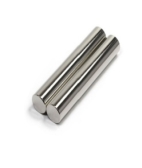
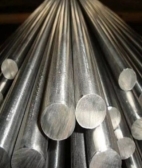
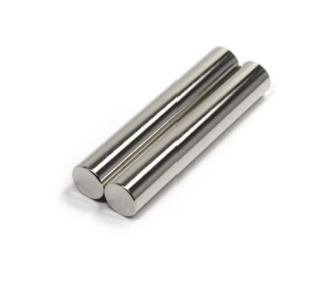
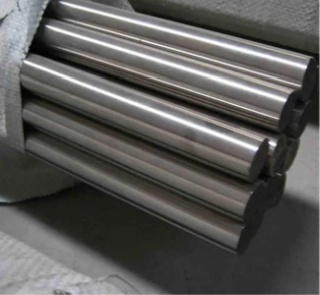
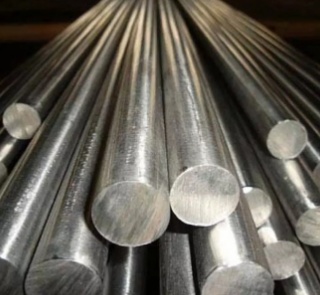
316L Stainless Steel Bar
316L stainless steel, similar to 316 stainless steel, has a lower amount of carbon of no more than 0.03% in its composition. This is meant to reduce the risk of carbon precipitation, to make a better choice for welding to achieve maximum corrosion resistance.
316L stainless steel bar just has a lower carbon content than 316 stainless steel bar and it is used mostly for welding purposes. The lower carbon content greatly lowers the precipitation of carbides in the heat-affected zone close to the weld, and such precipitation is likely to lead to intergranular corrosion of stainless steel in certain settings. Basically, their is no need to anneal weld joints prior to using the completed metal form using 304L, which helps save time and effort. 316L stainless steel bar is one of the most widely used stainless steel bars like 304, with better corrosion resistance. 316L stainless steel bar also has high temperature resistance that can go with up to 1000 degrees. Lastly, 316L stainless steel has stronger rust resistance than 200 series stainless steel materials.
Product Parameters
| Product Name | 316L Stainless Steel Bar |
|---|---|
| Type | Steel Bar |
| Outer Diameter (Round Bar) | 4mm - 500mm |
| Outer Diameter (Hexagon Bar) | 18mm - 57mm (11/16″ to 2-3/4″) |
| Outer Diameter (Square Bar) | 18mm - 47mm (11/16″ to 1-3/4″) |
| Flat Steel | 1/2″ to 10″, Thickness: 2mm - 150mm (customizable) |
| Length | 1 - 6 meters (customizable) |
| Standard | ASTM, AISI, JIS, GB, DIN, EN, etc. |
| Surface | Black, Bright Polished, Rough Turning, Mattness Surface Treatment, No.4, BA, etc. |
| Scope of Application | Shipbuilding, defense, automotive, textiles, paper and pulp, manufacturing, cement, heavy earthmoving equipment and construction, etc. |
Chemical Composition
| C | Si | Mn | Cr | Ni | S | P | Mo |
|---|---|---|---|---|---|---|---|
| ≤ 0.03 | ≤ 1.0 | ≤ 2.0 | 16.0 – 18.0 | 10.0 – 14.0 | ≤ 0.03 | ≤ 0.045 | 2.0 – 3.0 |
Mechanical Properties
| Tensile Strength Kb (MPa) | Yield Strength σ0.2 (MPa) | Elongation D5 (%) | Hardness |
|---|---|---|---|
| ≥ 480 | ≥ 177 | ≥ 40 | ≤187HB / ≤90HRB / ≤200HV |
Physical Performance
| Density (g/cm³) | Modulus of Elasticity (GPa) | Thermal Expansion (10⁻⁶/°C) | Thermal Conductivity (W/m·K) | Resistivity (μΩ·cm) |
|---|---|---|---|---|
| 7.99 | 193 | 16.0 | 16.2 | 74 |


