
Stainless Steel Bar
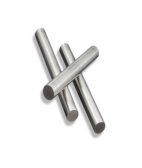
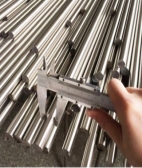
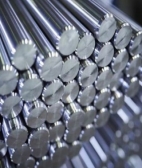
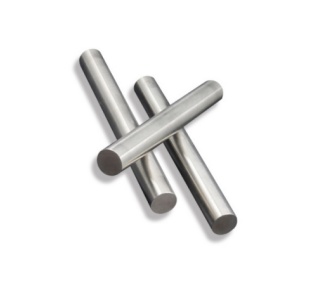
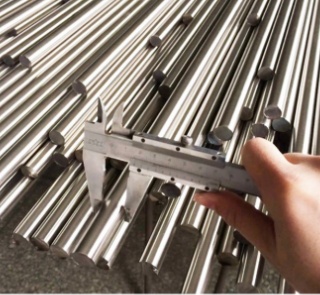
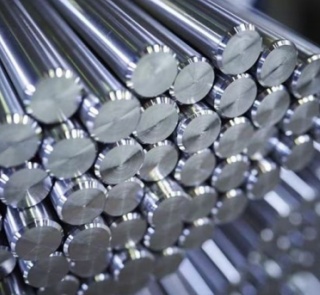
316 Stainless Steel Bar
316 stainless steel has extra 2-3% molybdenum, in addition to iron, chromium and nickel. Molybdenum significantly leads to better performance of 316 stainless steel in certain corrosive environments containing chlorides. So it is a very common choice in situations requiring higher corrosion resistance.
316 stainless steel bar has a number of convincing reasons to be used as a very practical option. Grade 316 is highly resistant to pitting and crevice corrosion in chloride environments as a standard molybdenum-bearing austenitic grade. So it is more commonly used in situations where higher corrosion resistance is asked. For example, in marine engineering, 316 stainless steel is often used to produce ship parts, subsea pipelines, offshore platforms and other facilities. Chemical industry is also where it is adopted. In addition, in the medical field, 316 stainless steel bars are sometimes used to manufacture medical devices and implants due to its excellent biocompatibility and corrosion resistance.
Product Parameters
| Product Name | 316 Stainless Steel Bar |
|---|---|
| Type | Steel Bar |
| Outer Diameter (Round Bar) | 4mm - 500mm |
| Outer Diameter (Hexagon Bar) | 18mm - 57mm (11/16″ to 2-3/4″) |
| Outer Diameter (Square Bar) | 18mm - 47mm (11/16″ to 1-3/4″) |
| Flat Steel | 1/2″ to 10″, Thickness: 2mm - 150mm (customizable) |
| Length | 1 - 6 meters (customizable) |
| Standard | ASTM, AISI, JIS, GB, DIN, EN, etc. |
| Surface | Black, Bright Polished, Rough Turning, Mattness Surface Treatment, No.4, BA, etc. |
| Scope of Application | Shipbuilding, defense, automotive, textiles, paper and pulp, manufacturing, cement, heavy earthmoving equipment and construction, etc. |
Chemical Composition
| C | Si | Mn | Cr | Ni | S | P | Mo |
|---|---|---|---|---|---|---|---|
| ≤ 0.03 | ≤ 1.0 | ≤ 2.0 | 16.0 – 18.0 | 10.0 – 14.0 | ≤ 0.03 | ≤ 0.045 | 2.0 – 3.0 |
Mechanical Properties
| Tensile Strength Kb (MPa) | Yield Strength σ0.2 (MPa) | Elongation D5 (%) | Hardness |
|---|---|---|---|
| ≥ 480 | ≥ 177 | ≥ 40 | ≤187HB / ≤90HRB / ≤200HV |
Physical Performance
| Density (g/cm³) | Modulus of Elasticity (GPa) | Thermal Expansion (10⁻⁶/°C) | Thermal Conductivity (W/m·K) | Resistivity (μΩ·cm) |
|---|---|---|---|---|
| 7.99 | 193 | 16.0 | 16.2 | 74 |


