
Alloy Pipe
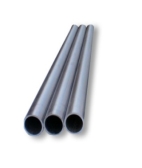
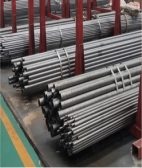
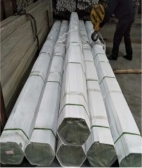
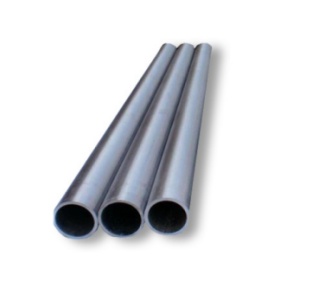
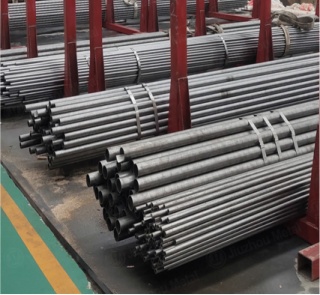
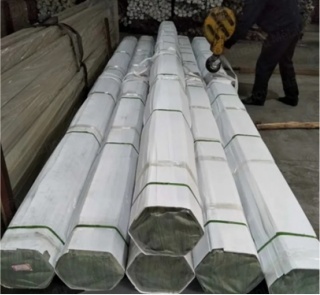
Hastelloy B-3 Pipe
Hastelloy B3 pipe performs better in terms of strength and corrosion resistance at high temperatures compared with traditional Hastelloy. B3 alloy has excellent stability and durability, especially in oxidizing and reducing environments, as well as corrosive environments such as strong acid and strong alkali.
Hastelloy B3 is a nickel-based high-temperature alloy mainly consisting of nickel, molybdenum, cobalt and other elements, of which the nickel content is about 65%. This alloy material is optimized on the basis of Hastelloy B2. By improving the thermal stability of the material, it significantly enhances the corrosion resistance, while also effectively improving the hot forming and cold forming performance. In recent years, Hastelloy B3 pipe has been increasingly used in the production and manufacturing of chemical equipment. Hastelloy B3 material has many unique properties. Its high elongation provides favorable conditions for cold forming operations. Compared to austenitic stainless steel, Hastelloy B3 material is harder and therefore needs greater pressure during cold forming or step forming processes.
Product Parameters
| Product Name | Hastelloy B-3 Pipe |
|---|---|
| Outer Diameter |
Round Pipe: 4mm - 200mm Square Pipe: 10*10mm - 100*100mm Rectangular Pipe: 10*20mm - 50*100mm |
| Wall Thickness | 0.6mm - 6.0mm |
| Length | 1 - 6 meters (Length can be customized) |
| Standard | ASTM, AISI, JIS, GB, DIN, EN, etc. |
| Surface | Black, Bright Polished, Rough Turning, Matt Surface Treatment, No.4, BA, etc. |
| Certificate | ISO, SGS, BV |
| Production Technology | Hot Rolling, Cold Rolling |
Chemical Composition
| C | Al | Si | S | Ti | Cr | Mn | Fe | Ni | Cu |
|---|---|---|---|---|---|---|---|---|---|
| 0.1 max | 0.15 - 0.60 | 1.0 max | 0.015 max | 0.15 - 0.60 | 19.0 - 23.0 | 1.5 max | 39.5 min | 30.0 - 35.0 | 0.75 max |
Mechanical Properties
| Tensile Strength (ksi) | 0.2% Yield Strength (ksi) | Elongation % in 2 inches |
|---|---|---|
| 75 | 30 | 30 |
Physical Performance
| Item | Value | Temperature (°C) |
|---|---|---|
| Density | 7.94 g/cm³ | Room |
| Specific Heat | 0.11 Kcal/kg·C | 21° |
| Melting Range | 1357 - 1385°C | - |
| Modulus of Elasticity | 196.5 KN/mm² | 20° |
| Electrical Resistivity | 98.9 µΩ·cm | 20° |
| Coefficient of Expansion | 14.4 µm/m·°C | 20 - 100° |
| Thermal Conductivity | 11.5 W/m·K | 20° |


