
Stainless Steel Bar
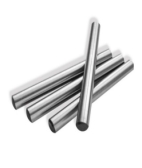
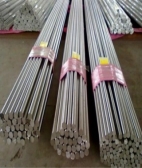
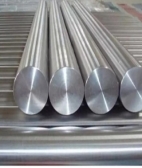
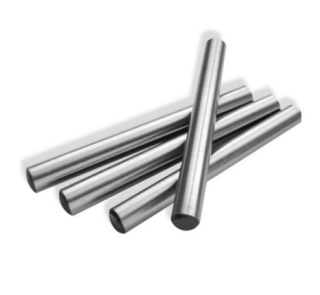
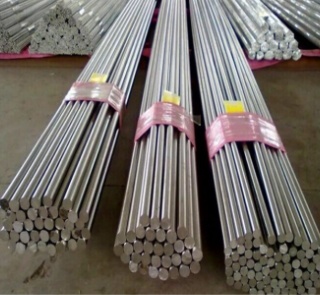
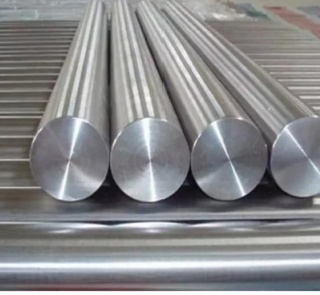
430 Stainless Steel Bar
430 stainless steel has always been a popular material for a variety of applications for its durability and corrosion resistance. However, welding 430 stainless steel can be challenging due to its high chromium content.
430 stainless steel bars are recognized for their ability to resist oxidation and rust in humid or mildly corrosive environments. Chromium inside forms an invisible protective layer on the surface to prevent rust. Another advantage of this steel material is its resistance to high temperature without losing strength or turning brittle. Industries where 430 stainless steel bars are frequently used as manufacturing parts include aerospace engineering, medical device manufacturing, petrochemical processing plants, and marine applications. However, welding 430 stainless steel is not an easy job given its high chromium content. Be sure to clean them thoroughly with a wire brush to remove any discoloration caused by heat exposure during the welding process afterwards.
Product Parameters
| Product Name | 430 Stainless Steel Bar |
|---|---|
| Type | Steel Bar |
| Outer Diameter (Round Bar) | 4mm - 500mm |
| Outer Diameter (Hexagon Bar) | 18mm - 57mm (11/16″ to 2-3/4″) |
| Outer Diameter (Square Bar) | 18mm - 47mm (11/16″ to 1-3/4″) |
| Flat Steel | 1/2″ to 10″, Thickness: 2mm - 150mm (customizable) |
| Length | 1 - 6 meters (customizable) |
| Standard | ASTM, AISI, JIS, GB, DIN, EN, etc. |
| Surface | Black, Bright Polished, Rough Turning, Mattness Surface Treatment, No.4, BA, etc. |
| Scope of Application | Shipbuilding, defense, automotive, textiles, paper and pulp, manufacturing, cement, heavy earthmoving equipment and construction, etc. |
Chemical Composition
| C | Si | Mn | Cr | Ni | S | P | Mo |
|---|---|---|---|---|---|---|---|
| ≤ 0.03 | ≤ 1.0 | ≤ 2.0 | 16.0 – 18.0 | 10.0 – 14.0 | ≤ 0.03 | ≤ 0.045 | 2.0 – 3.0 |
Mechanical Properties
| Tensile Strength Kb (MPa) | Yield Strength σ0.2 (MPa) | Elongation D5 (%) | Hardness |
|---|---|---|---|
| ≥ 480 | ≥ 177 | ≥ 40 | ≤187HB / ≤90HRB / ≤200HV |
Physical Performance
| Density (g/cm³) | Modulus of Elasticity (GPa) | Thermal Expansion (10⁻⁶/°C) | Thermal Conductivity (W/m·K) | Resistivity (μΩ·cm) |
|---|---|---|---|---|
| 7.99 | 193 | 16.0 | 16.2 | 74 |


